
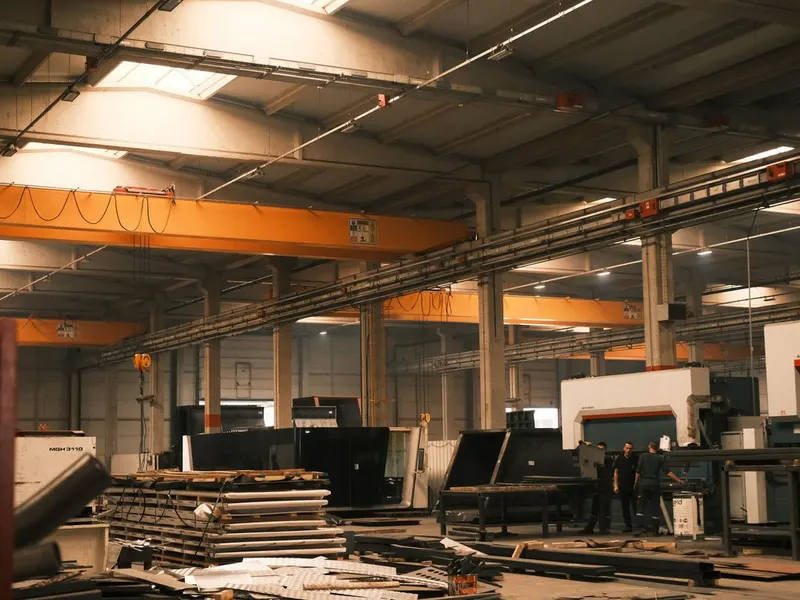
Reel handling
A paper reel is both heavy and has a sensitive surface: a badly gripped reel means crushing and edge damage — straight to scrap. That's why attachment selection can be more critical than the crane itself.
A C-hook picks up the reel from the side; clamp and mechanical grip systems adapt to different diameters and widths. The attachment's weight is deducted from capacity and the tipping moment is factored in.
Continuous operation and maintenance
Paper mills run without interruption; planned stops are rare and short. During these stops, the crane also serves machine maintenance — so it's critical both in production and in maintenance.
For this reason, duty class is chosen in the upper groups, critical spare parts are kept on site, and maintenance is scheduled around planned stops.
Typical solutions
| Requirement | Solution |
|---|---|
| Reel handling | C-hook, clamp or mechanical grip attachment |
| Surface sensitivity | Soft-contact surface, inverter-controlled precise movement |
| Continuous operation | Upper duty class, spare parts stock |
| Machine maintenance | High lifting height, precise positioning |
| Humidity and vapour | Elevated IP rating, suitable paint system |
| Short maintenance window | Planned maintenance, fast-response service agreement |
Frequently asked questions
How long does an attachment change take?
It's quick with fast-change coupling systems. If the range of attachments is known up front, the change mechanism is included in the design.
Can the same crane handle both reels and maintenance?
Yes; but the difference in lifting height and attachment required by the two jobs needs to be discussed from the start. In some facilities an auxiliary hook solves this.